
This website has affiliate links to products. If purchases are made through these links, we may receive a commission. These affiliate links help pay for the costs of hosting this website, and we are grateful for your support.
Ever wandered through a cathedral and felt an echo of something older beneath your feet? There’s a reason those foundations feel heavier than stone.
Stones That Speak
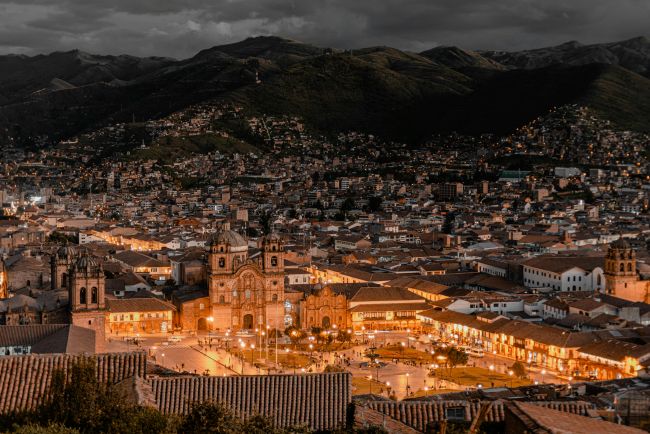
Catholic churches around the world often rise directly over ancient sacred sites, creating a physical layering of memory that spans thousands of years. From the Mexico City Metropolitan Cathedral built atop the Mexica (Aztec) Templo Mayor, to churches in Spain constructed over Roman temples or pre-Christian sanctuaries, the stones themselves hold a continuity of reverence. Even in places like Cusco, Peru, where the Church of Santo Domingo stands on the foundations of the Incan Qorikancha, the pattern continues. These sites weren’t chosen at random; they were already recognized as powerful places long before Catholicism arrived, and the stones remember what humans forget.
This recurring phenomenon suggests a deeper theory: humanity instinctively returns to places where the spiritual field feels strong, regardless of the religious name placed on top. Sacred sites are less about the structure and more about the energetic imprint in the land. When Catholics built over older temples, it wasn’t just an act of dominance—it was also an unconscious acknowledgment that something holy already lived there. These layered sites reveal a kind of spiritual muscle memory that humanity keeps responding to across eras. Beneath every cathedral is a reminder that holiness is older than any single tradition.
Historical Context
The pattern of Catholic churches rising on sacred indigenous grounds is intertwined with the Christianization efforts of the Spanish empire. In places like Peru, the Philippines and Mexico, missionaries claimed the most important native ceremonial centers to physically and symbolically establish Christian authority. These regions weren’t spiritually empty; they were deeply rooted in ancestral traditions, cosmologies, and rituals long before colonization. By building cathedrals on top of them, Spaniards often attempted to overwrite spiritual identity with a new foundation. Yet the old traditions never vanished; they simply adapted and whispered beneath the new structures.
Today, many communities are reclaiming their sacred places and restoring stories that were pushed underground. This reclaiming mirrors broader global movements, such as recent Indigenous land acknowledgments and cultural revitalization efforts in Canada, where communities assert sovereignty and reconnect with their ancestral territories. While Catholic churches remain important spiritual spaces for many, there is a growing recognition that these sites carry layered histories that must be honored. The narrative is expanding to include both the wounds and the wisdom embedded in these foundations; by reclaiming these stories, people are reclaiming their true spiritual identities.
Sacred Geometry and Alignment of Memory
Long before Catholicism and colonial expansions, ancient civilizations aligned temples, pyramids, and ceremonial sites with celestial events and ley lines. The Egyptian pyramids echo the stars of Orion’s Belt, while tribal and shamanic traditions across the world placed structures where the earth’s energetic currents felt strongest. When Catholic cathedrals were later constructed on these sites, some of the alignments were preserved—sometimes intentionally, sometimes by following the land’s natural pull. The result is that many cathedrals still resonate with the geometry of the ancient world, and sacred geometry becomes a silent conversation between eras.
This geometry can be seen as a language of divine memory, a pattern that cultures kept rediscovering. Even when new religions replaced old structures, the invisible lines beneath them continued to guide the builder’s hands. Cathedrals echo the symmetry of ancient temples because both respond to the same cosmic map; whether consciously recognized or not, the shapes, proportions, and orientations of these holy places reflect our desire to align with something greater. Through sacred geometry, the past continues to speak through stone.
Divine Christ: Remembering Through Stone
The layering of sacred sites mirrors a deeper spiritual layering within the Christian story, specifically the pattern of the Divine Christ as the Logos. Christ as Logos represents the divine order that underlies creation, the blueprint of harmony woven into all things. When a Catholic cathedral stands over older ruins, it becomes a physical metaphor for how new revelations emerge from ancient truths. The stones show us that spiritual wisdom isn’t erased; it is built upon, integrated, and brought forward into a new form. In this way, each layered site becomes a living testament to Christ consciousness unfolding through time.
Artists like Leonardo da Vinci intuitively understood this universal pattern. In The Last Supper, the geometry of the room, the placement of Christ, and the hidden proportions point to an underlying cosmic order. The Vitruvian Man reflects the same principle: that the human being is a microcosm of divine symmetry. Da Vinci wasn’t just making art; he was revealing the Logos through line, form, and proportion. These masterpieces help us remember that Christ consciousness is not limited to doctrine, but is a universal pattern echoing through science, art, architecture, and the stones beneath our feet.
Walking the Stones With Awareness
When visiting a cathedral or ancient sacred site, we can begin by slowing our pace and noticing the atmosphere around us—its weight, its silence, and its subtle hum. These places carry layers of prayer, ritual, and our longing, and our body can sense the history etched into the walls. Try resting your hand on a column or stone and simply observe how it feels; the textures often hold more memory than we expect. Allow yourself to take in the architecture not just visually but energetically, as if you’re listening with your whole being. Awareness turns a visit into an encounter.
You can also tune into the space by imagining the land beneath the floor, the older temple foundations, and the people who once gathered there. Let the layers coexist without trying to judge or analyze them. Feel how the field gently shifts as you move from the doorway to the altar or from the nave to the side chapels. Offer a quiet intention or prayer for the people who built, worshipped, and remembered here across centuries. In this simple practice, the stones become companions rather than artifacts.
Rebuilding the Temple Within
The journey from ancient ruins to towering cathedrals echoes a deeper transformation happening within each of us. Just like these sacred sites, we, too, are built on layers of memory: ancestral, emotional, and spiritual. We hold stories from those who came before us, and yet we are also creating something new. The inner temple is not formed by erasing the past but by honoring it and building from its foundation. As we reconnect with these layers, we reclaim pieces of ourselves.
Ultimately, the true cathedral is the one rising inside us. It is constructed through awareness, compassion, and alignment with our own inner Logos—our highest pattern. Standing in sacred places reminds us that we carry the same divine architecture within; we are both the ancient ground and the emerging tower of light.
We are the bridge. We are the breath. We are the one who remembers the pattern and gives it form.
A Prayer for the Reader
May this article find the hearts that are ready to remember.
May its words awaken the quiet knowing that has always lived beneath the surface of life—like the ancient stones beneath the cathedrals.
May you feel the gentle return of your Da Vinci self:
the part of you that sees patterns, hears truth in silence,
and recognizes the divine geometry that shapes your days.
May the layers of history, memory, and spirit rise within you in harmony,
reminding you that you are both the ancient ground
and the living cathedral.
May your mind open, your heart soften,
and your inner Logos speak clearly once more.
And may this remembering ripple outward gently—
into your choices, your creations, your relationships,
and the collective field we all share.
And so it is!